

Every major conflict since 1945 has produced a generation of defense-tech entrepreneurs who discovered, when the shooting stopped, that their customer had been the war. Israel is about to find out whether it’s any different.
The scale of what has been built is not in dispute. MAFAT for Startups, the Defense Ministry’s startup integration engine, has doubled its portfolio to over 300 companies in two years. More than 100 of those companies have had technologies adopted directly into IDF operations during the current conflict. In Michigan this summer, twenty battle-tested Israeli startups will tour the National All-Domain Warfighting Center, twice the size of Israel, to meet the innovation planning team for Northern Strike, the largest multi-service military exercise on U.S. soil. In Miami, CENTCOM, the Defense Innovation Unit, Lockheed Martin, Anduril, and Palantir will convene with Israeli founders. The iteration loop underneath all of it: deployment, combat testing, feedback, update, now runs in days. A drone detection company gets IDF feedback that its acoustic sensors can’t distinguish quadcopter motors from diesel generators; forward-deployed engineers push an update within the week and validate against live targets.
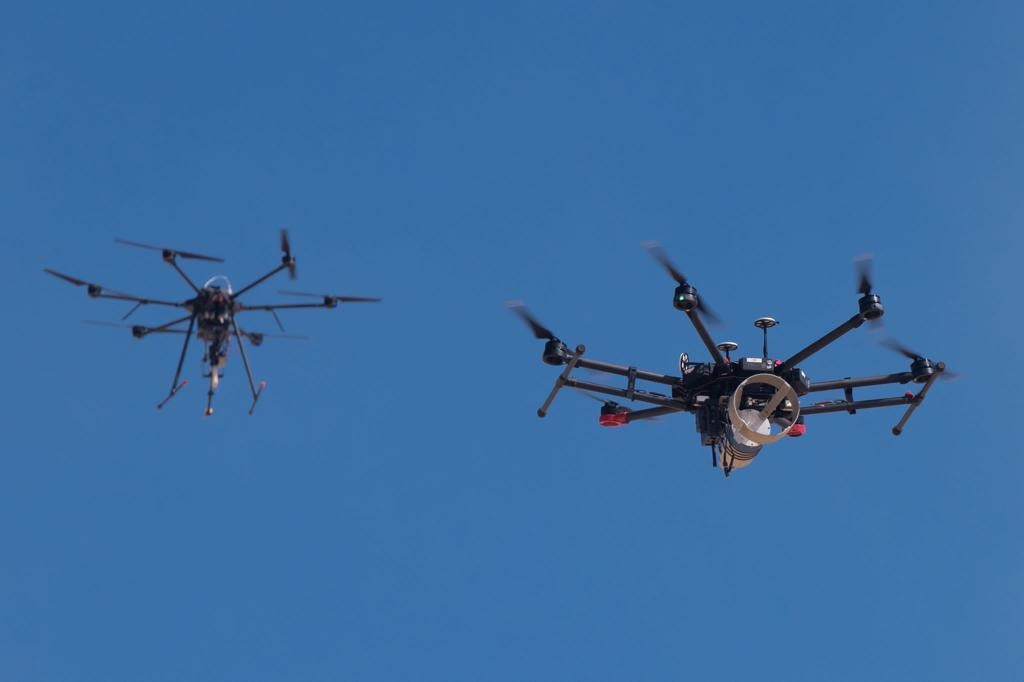
The dominant narrative holds that October 7 permanently broke the procurement bureaucracy — that Israel has installed a fast-iteration industrial base that will outlast the conflict. This is mostly wishful thinking. Defense establishments are slow by design, not by accident. They are slow because the consequences of deploying untested systems at scale are catastrophic, and because institutional incentives — political, budgetary, contractual — reward caution in peacetime with the same consistency that combat pressure rewards speed. The argument that wartime has permanently dissolved those incentives requires the war to keep going in order to stay true.
Where are Israel's Defense Tech Startups?

Since October 7, I've been exploring Israel's defense-tech startup ecosystem to find an answer to a troubling paradox: Why, despite a wealth of startup talent on its doorstep and a live battlefield environment, is Israel's defense system struggling to rapidly test and deploy battlefield innovations?
The pessimists, though, are wrong about what this means. They see a wartime anomaly that will inevitably revert when the conflict ends. What they underestimate is how much the physical architecture of the ecosystem has already changed: the people, the processes, the institutional relationships between founders and operational commanders. That knowledge doesn’t evaporate. What it requires is a substitute customer.
Here the comparison to Israel’s cybersecurity industry, almost universally invoked as the template, points in precisely the wrong direction. Unit 8200 alumni built Check Point, CyberArk, and Wiz by carrying skills and networks into commercial markets where the end customer was a corporate security team that paid on a SaaS contract. The procurement cycle was months. The buyer had a credit card. Defense hardware has procurement cycles measured in years, interoperability requirements demanding regulatory clearance, export licensing contingent on diplomatic relationships, and political dependencies capable of vetoing a signed contract. The conditions that produced a $20 billion Israeli cyber export industry are structurally incompatible with the conditions required to build a durable defense-tech one. Founders who treat the cyber story as a map will misread every signal.
The situation resolves in one of three ways. In the worst case, the IDF’s institutional conservatism reasserts itself the moment operational pressure lifts, and the 300-plus companies that built for wartime procurement discover that peacetime defense budgets move on political timelines, not tactical ones. Several dozen will fail. The rest will pivot toward export markets they are not yet structured to access. In the best case, remote but not impossible, the IDF formally institutionalizes fast-iteration procurement as permanent doctrine, Israeli defense-tech becomes the reference architecture for AI-enabled warfare among NATO allies, and export revenues generate a demand signal durable enough to sustain the ecosystem without domestic conflict.
Ask Iran What It's Like To Fight Without AI

The Iranian pilot never saw the missile that killed him.
The most probable outcome is neither. Call it the Procurement Armistice: legacy systems and fast-iteration startups coexist in permanent institutional tension inside the IDF, neither fully replacing the other. Export contracts — U.S. DIU pipelines, joint pilots with NATO units, integration into existing allied platforms — sustain the ecosystem’s most capable tier. The rest consolidate, pivot, or dissolve. This is not failure. It is what a real defense-tech industry looks like before it matures. Israel’s cyber sector spent a decade in its own version of this before Unit 8200 alumni collectively understood that the government was not their primary customer. The founders now pitching to Pentagon officials in Miami are beginning to understand the same thing about the IDF.
The question is whether they figure it out before the peace does.