


Two stories emerged from Israel’s defense establishment this week.
The first came from the Ministry of Defense. Israeli defense exports hit an all-time record: $19.2 billion in 2025, up nearly 30% in a single year. Missile defense, radar systems, electronic warfare, command-and-control systems. More than half the deals were worth over $100 million. Government-to-government agreements alone accounted for roughly $10 billion. Europe, Asia and the Gulf are buying. Israel is now among the world's top arms exporters.
The second story came from a field in southern Lebanon.
A Hezbollah operator launches a fiber-optic FPV drone that costs somewhere between a few hundred dollars and perhaps $1,500, depending on configuration. The drone flies toward a cluster of Israeli soldiers hiding beneath improvised netting stretched over vehicles and positions. The drone wins. 15 Israeli soldiers and civilians have been killed by Hezbollah drones since April this year. It is the leading cause of battlefield deaths in Lebanon.
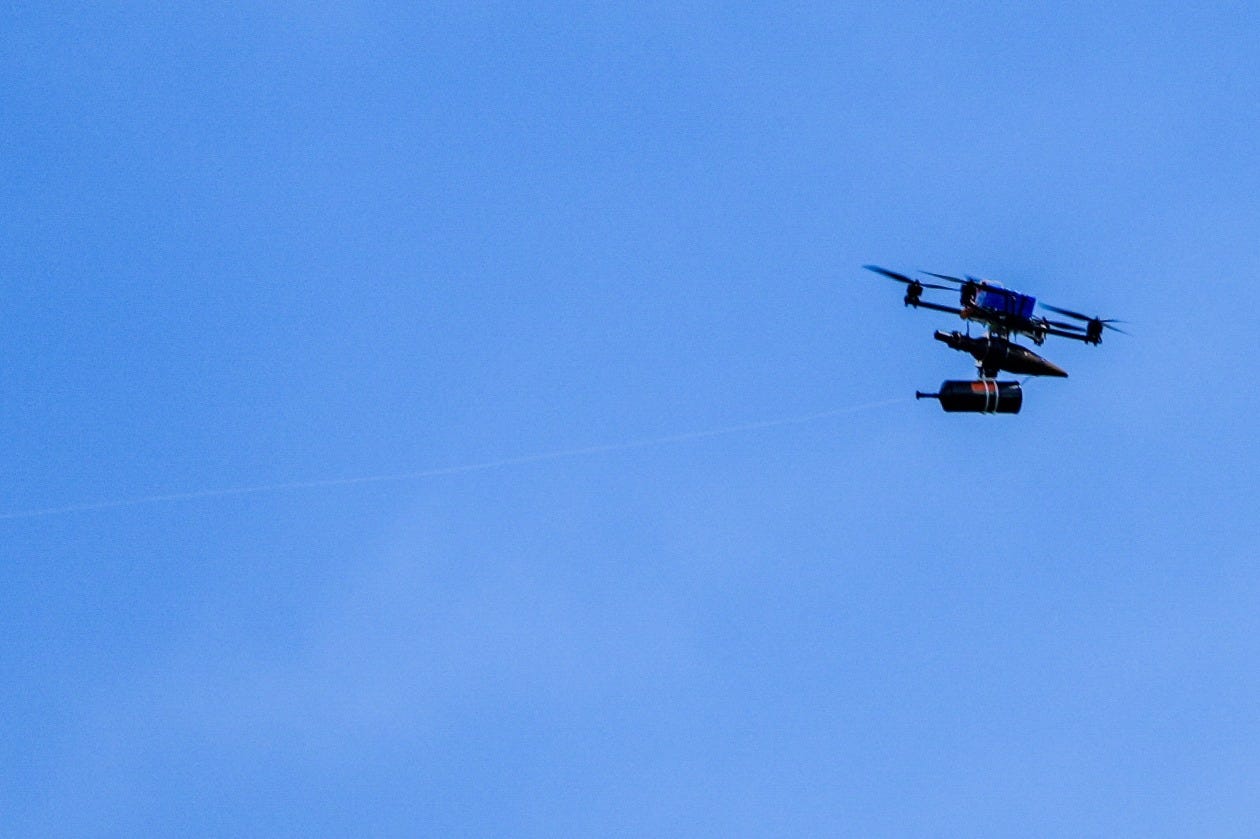
The contrast is absurd. Israel exported $19.2 billion worth of military technology last year. Meanwhile, Israeli soldiers in Lebanon are desperately defending themselves against drones that cost less than a night at a standard Tel Aviv hotel.
One Israel is selling the future of warfare. The other is discovering that the future arrived before it was ready. The export figures tell a story of industrial strength. The battlefield tells a story of adaptation failure.
For two decades Israel perfected the art of expensive military excellence. Precision interceptors. Advanced sensors. Artificial intelligence. Networked warfare. Systems that foreign militaries are now buying in record quantities because they have been tested under real combat conditions.
Then along came the FPV drone. Not as a replacement for sophisticated weapons. As a challenge to their economics. The drone itself is not particularly impressive. A small airframe. Commercial electronics. An explosive payload. A spool of fiber-optic cable that makes it immune to electronic jamming. The innovation is not technological, it’s that the entire package costs less than the marketing brochures for Israeli military hardware.
And so one of the world’s most advanced militaries finds itself confronting a battlefield problem it should have learned from Ukraine over the past 4 years.
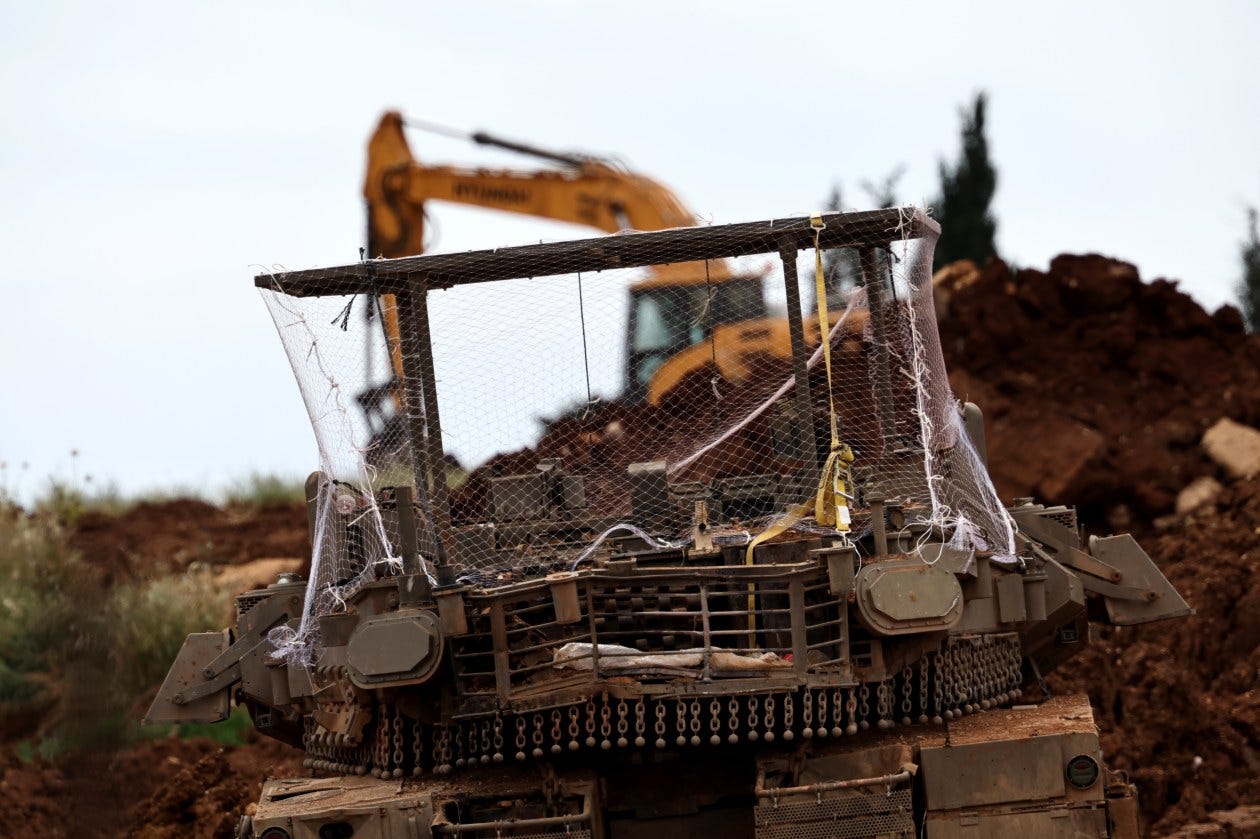
The images coming out of South Lebanon are exasperating. Israeli tanks covered in mesh. Positions draped with netting. Soldiers spending as much time worrying about what is above them as what is in front of them.
That is the real tension hiding behind this week’s export celebration. A nation can export billions of dollars in sophisticated defense technology while simultaneously struggling against a weapon assembled from commercial components, guided by an operator with a joystick and protected from jamming by a spool of fiber-optic cable.
That is not a contradiction. It is the defining characteristic of modern war. Technological superiority still matters. Industrial capacity still matters. Air dominance still matters.
But adaptation matters more.