

Israeli defense technology companies face a growing contradiction: international buyers increasingly want Israel’s real-world “combat provenance,” yet some are asking vendors to scrub any Israeli origin from the final product.
This tension between operational necessity and political liability was one of the themes at an event in Tel Aviv titled The Modern Defense Stack, with founders, operators, investors, and advisors. All have direct experience of the subject.
While formal government embargoes like Spain’s and the UK draw headlines, practitioners warned that informal friction—from port worker refusals to stand-offish institutional investors—is quietly reshaping how Israeli defense firms manufacture, raise capital, and go to market. To sustain global growth, companies are being forced to localize operations and strip away national branding rather than relying on Israeli pedigree.
“Being Israeli is not a go-to-market strategy,” one of the panelists said. Companies still need a scalable product and a route to the buyer rather than relying on their Israeli origin or a demonstration to open doors.
It’s true that Israel is a test lab for battlefield tech. It’s also true that some countries make exceptions if Israel can solve a specific requirement they have. But founders shouldn’t rely on that market entry strategy.
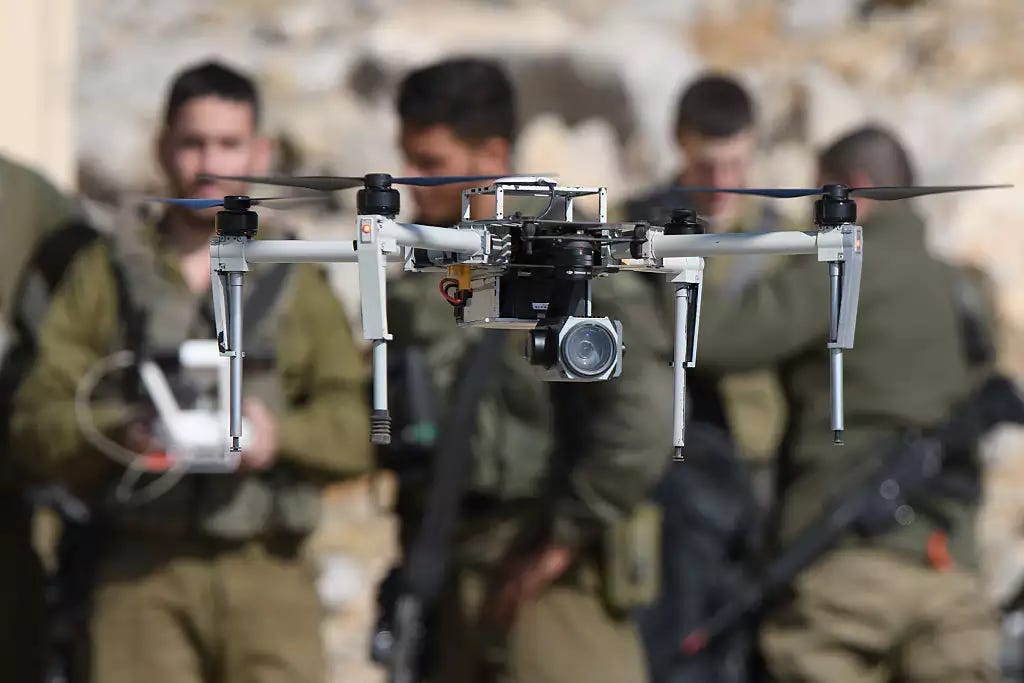
///NOTE: There were 3 panels at the event. The political angle was only one of several themes discussed. I didn’t get their permission to quote them, but it was an open event, so I think quoting on background is a fair trade-off.///
Echoing trends reported across the broader Israeli tech sector, defense panelists noted that logistics disruptions now extend beyond state-level export restrictions to organized labor and port operations, sometimes causing delays for critical defense components.
“Supply-chain disruption is no longer limited to formal decisions— it now extends to ports,” a panelist said. “They refuse to send out your shipment, leaving you with a supply chain in standstill. An entire system can be held up by one component.”
While nobody is arguing there is a broad boycott in place, some speakers described pressures that could push companies to change where they manufacture and how they sell.
One investor argued that market access will increasingly depend on local structures. In Europe, he expects Israeli companies to use “joint ventures” and “supply through local companies.” The US, he said, has historically been easier for Israeli firms, but “will become more and more complicated”; working through US primes may become necessary.
That localization push extends to the hardware itself. While Israel’s battlefield testing remains its strongest calling card, some overseas buyers are explicitly asking suppliers to “delete any Israeli evidence on the product” before delivery, a panelist said.
Another investor noted privately that at least one venture capital firm passed on a promising defense tech deal after a U.S.-based limited partner objected to the Israel connection.

None of this has translated into a drop in end-user demand or investments in startups. Even amid political opposition, defense buyers with urgent operational gaps still turn to Israeli systems. Defense customers often prefer dual-use: lower export restrictions, better pricing, and faster availability. “As much as they may hate us, they have defense requirements that only we can solve,” a panelist said.
Eastern Europe is another opportunity. As Kevin Baxpehler observes in VC Cafe, frontline nations, particularly those closer to Russia and Turkey, are signing the biggest Israeli deals.
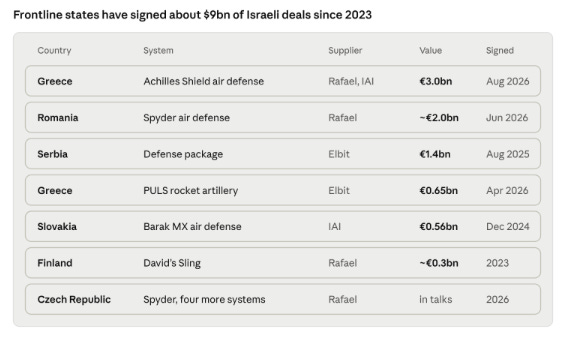
Gulf states, Latin America, and Asia are also growing opportunities, a panelist at The Modern Defense Stack said.
That’s nice, but the real prize is in Washington DC. Opening a U.S. entity to sell into the Pentagon is not new, though speakers noted that hiring local executives to lead those efforts has become mandatory. As one participant put it: “Rani from Israel will not be a major prime of the Department of War. Period.”
Very interesting analysis. Canadian Defense Tech is slowly becoming a thing and I think that if the relationship becomes better in the future we might see some joint ventures here as well, but just like in the US, a local executive will have to lead them.
The process of building civilization is a long and winding road. Great analysis. Here's hoping the logistics aren't too complicated going forward and the west becomes less hostile towards Israel.